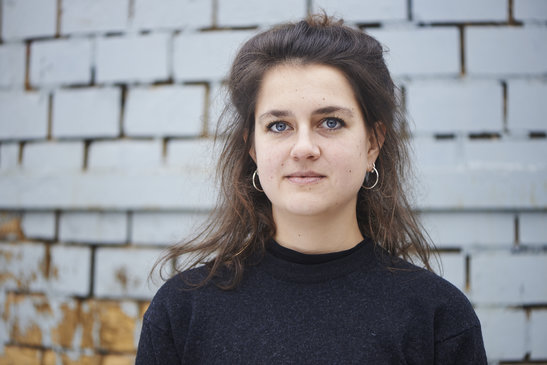
Konzeptwerk: Ruth and Lasse, you wrote the analysis of the coalition agreement together with Matthias Schmelzer. What motivated you to conduct this analysis?
Lasse: It was winter and we needed the money.
Ruth: It was clear to us that with the new government, including the Greens, climate protection would move higher up the agenda. We wanted to take a closer look: What is being promised, how is it being measured, what measures are being taken? But also: Where are the gaps?
Lasse: We believe it is important to examine where we stand after the election from the perspective of social movements. What are the starting points and conflict issues? This ties in with our Election manifesto analysis from last summer onwards and are trying to develop a perspective on the entire election period. We also want to learn from this for the future, what remains of election promises at the end.
So, what was left? What changes were made between the election manifestos and the coalition agreement?
Lasse: The coalition agreement is already a combination of the three parties and their election manifestos. This is readily apparent from our color-coded rating system in the study. It also shows, point by point, where each party prevailed. For example, the Greens won on renewable energies, while others won in different areas. Many vague formulations from the election manifestos remain rather abstract and vague here as well. For instance, public procurement based on social and environmental criteria has often been included in election manifestos, including last year, but it hasn't been truly specified in concrete terms, either there or in the coalition agreement.
My impression while browsing was that the FDP often prevailed. So, despite many yellow ratings for the Greens' and SPD's plans, the coalition government is rated orange or worse.
Lasse: Well, the Greens want ecological modernization. That's not so far removed from the other parties' approach, just pursued more consistently. The results lie somewhere in between, but leave gaps from a climate justice perspective.
Ruth: Overall, much has been made up for in terms of ecological modernization, for example, the expansion of ecological infrastructure and renewables. At the same time, however, many levers for achieving the 1,5-degree target are not being fully utilized. From a global justice perspective, there is a huge gap.
Does that mean the traffic lights aren't doing enough?
Ruth: Yes, unfortunately – and on two levels. First of all, the target is not ambitious enough to achieve the 1,5-degree target and climate justice. The new government is basing its budget on Germany's remaining budget, in line with last year's ruling by the Federal Constitutional Court. However, this budget is too high if the remaining CO2 emissions are to be distributed fairly globally. Furthermore, the measures are also insufficient to achieve this goal.
Germany's historical responsibility is fundamentally not reflected. Attempts to alleviate climate debt, for example, through reparations payments to countries in the Global South, are not included in the coalition agreement. Nor are there any plans for ending neo-colonial economic exploitation.
You clearly demonstrate the dilemma: While there's some progress, overall too little is happening. How do you assess this?
Lasse: On the one hand, we can see what the climate movement has achieved here—that is, what climate policy shifts have taken place in recent years and what progress has been made. On the other hand, climate protection is still conceived purely technically as ecological modernization. It's all about green growth and many pseudo-solutions, such as the hydrogen strategy and the hope for green hydrogen. We will have to grapple with these "solutions" in the coming years.
Ruth: The results will only be assessable in a few years, when we see what is actually implemented; for now, these are just promises. Climate protection is playing a greater role, which is positive. And with these immediate measures, Habeck has made his climate policy more credible. They're working with numbers, and we got the impression that people are taking this seriously. However, this simplistic understanding of climate policy remains and is a far cry from climate justice. Therefore: This is progress, but not good enough.
You've repeatedly raised the issue of ecological modernization and green growth. Why can't this stop the climate crisis?
Ruth: Ecological modernization and green growth fit into the logic of the current economic system. The system itself isn't meant to be fundamentally changed; the economy is simply being made greener, for example, by switching from fossil fuels to electricity, supposedly green electricity, as seen in the automotive industry. But this economic system is growth-based. This means it has to grow to remain dynamically stable, and in doing so, it consumes ever more resources. This doesn't reduce emissions sufficiently to stay on the 1,5-degree path. Furthermore, this focus on climate is always solely about CO2, neglecting the fact that other planetary boundaries are also being exceeded and other resources or sinks are being overexploited. The goal of this concept paper is therefore a socio-ecological transformation: We must distribute resources more equitably and shape the economy democratically to preserve our livelihoods.
What measures would be taken to bring about such a transformation?
Ruth: There are certainly measures that are mentioned in various election manifestos and are also being discussed publicly. These include, for example, a speed limit, a ban on short-haul flights, and car-free city centers. Then there are other measures that are not yet as well-known or popular, but would be very effective. For example, a reduction in working hours. This could reduce consumption and production and organize our lives differently. Or socio-ecological tax reform and redistribution measures.
Lasse: A transformation of the economic system would be needed to overcome the structural dependence on growth. This isn't happening at all. This is where the contrast between ecological modernization and a truly climate-friendly economy becomes particularly clear.
Ruth: Overall, relying solely on technology poses a high risk. Often, it doesn't even exist yet, or it's very risky. This creates major social imponderables. The measures just mentioned would be safer in this regard.
What do you hope the study will achieve?
Lasse: Like many others, we're asking ourselves how much more could be achieved in climate policy. Politics always reflects the current balance of power, and our analysis reflects that as well. We want to contribute to identifying levers that, as social movements, allow us to shift the boundaries of what's possible and introduce alternative measures. Because our goal remains climate justice.

In conversation:

Lasse Thiele

Ruth Krohn
CARRY US WITH US
At Konzeptwerk, we advocate for a fair and ecological economy that ensures a good life for all.
We have ideas, courage, and need staying power. You can give us that.
Support the concept with a regular donation and help us.