
Democracy requires good public services and a needs-based economy. Cuts to social welfare systems are partly responsible for the shift to the right. Instead, we should tax the rich more heavily and counteract the concentration of money and power.
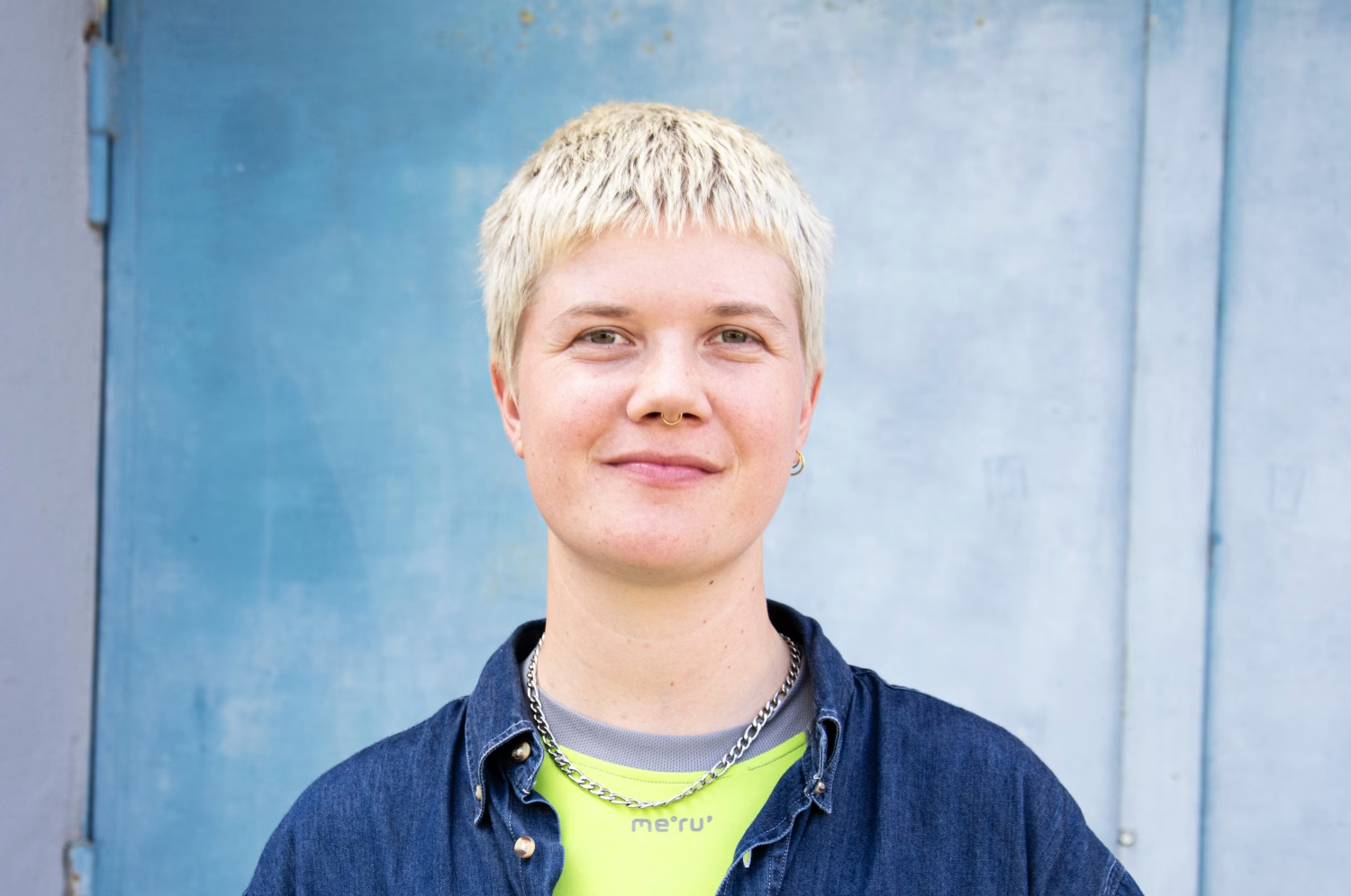
I am Lu from Konzeptwerk Neue Ökonomie, a non-profit organization based in Leipzig. We develop concepts for a new way of doing business and are committed to political education and the socially and ecologically just transformation of our economy.
As a conceptual organization, we deliberately cast utopian perspectives on the challenges of the future. We believe that looking at existing possibilities empowers us to act and provides guidance rather than allowing ourselves to be guided by fear.
Adopting this perspective isn't always easy. Personally, the last European elections left me feeling powerless. This pushed my utopia of a world in which people can be different without fear further into the distance. The election results show what many have long felt: democratic, social, and ecological achievements are crumbling.
The motto of today's demonstration is "Stop right-wing extremism – defend democracy." But how?
We need strong solidarity structures now – and even more so in the future – and the organization of support services to mitigate the consequences for those most affected. For example, people who accompany asylum seekers through the process, support queer youth centers, or offer counseling for welfare recipients.
But we can't just limit the damage. Times of crisis are times of upheaval. Fascism seeks to rob people of their imagination. Now is the moment to develop courageous alternatives that counter the fascists and their backward-looking narratives.
Research shows that an effective short-term electoral strategy for center-right parties is to shift attention toward socio-cultural issues such as migration and unemployment, and away from unpopular economic policies.
This also seems to be the current strategy of the traffic light government: They are pandering to voters with right-wing rhetoric. Olaf Scholz is a prime example of this, with statements like "we have to deport people on a large scale." However, this doesn't make the SPD more electable; it merely makes misanthropic positions more socially acceptable.
Right-wing and racist rhetoric has direct consequences and is already being implemented by the governing parties today – even before the AfD came to power. I would like to cite just a few examples: the citizen's income is being tightened with sanctions, while the newly introduced payment cards exclude and stigmatize people in the asylum process. The "basic child benefit" offers no real relief for families in need, and the stock of social housing continues to shrink. Even democratic initiatives attempting to counteract all of this are being held back by uncertain funding and short project deadlines.
People believe this will take the wind out of the AfD's sails and win back voters. Instead, the traffic light coalition is digging its own grave. Several studies show that right-wing parties are strengthened by government austerity programs and the reduction of public services. Austerity policies and crises fuel fear and resource conflicts. Populists exploit this to their advantage, blaming the weakest in our society for the perceived scarcity.
Democracy needs robust public services. This isn't a luxury we can't currently afford, but rather the foundation of a democracy we absolutely must have! Cuts to social programs are often justified by concerns about burdening future generations with national debt, yet financing investments through debt is standard fiscal practice. A balanced budget won't make our future any more livable. We need more investment in infrastructure and climate protection, as well as a deprivatized public service system that benefits everyone. We can cut costs by reducing the militarization and armament of the armed forces and by targeting the super-rich.
Because democracy also needs a fair redistribution of power and money . We must ask ourselves: Can we still afford the rich? The tax privileges for the wealthy and corporations cost us billions annually, money we urgently need for social justice and the ecological transformation. It's time to reintroduce the wealth tax and counteract the growing gap between rich and poor.
And finally: Democracy needs an economy that serves people, not profit!
Our current economy promotes inequality and is the perfect breeding ground for right-wing ideologies. We need an economy oriented toward people's needs—housing, health, mobility, and social participation. We must set the course for this now: through shorter working hours, the socialization of housing, free public transport, and an economy that prioritizes caring for one another.
We don't have to leave the narratives about our future to the right. If we dream of a different world and start building it today, on a small scale, we will be stronger.
We'd like to ask you: What kind of world would you like to live in? And invite you to take a stand for it. Because the world we live in is not without alternatives.